
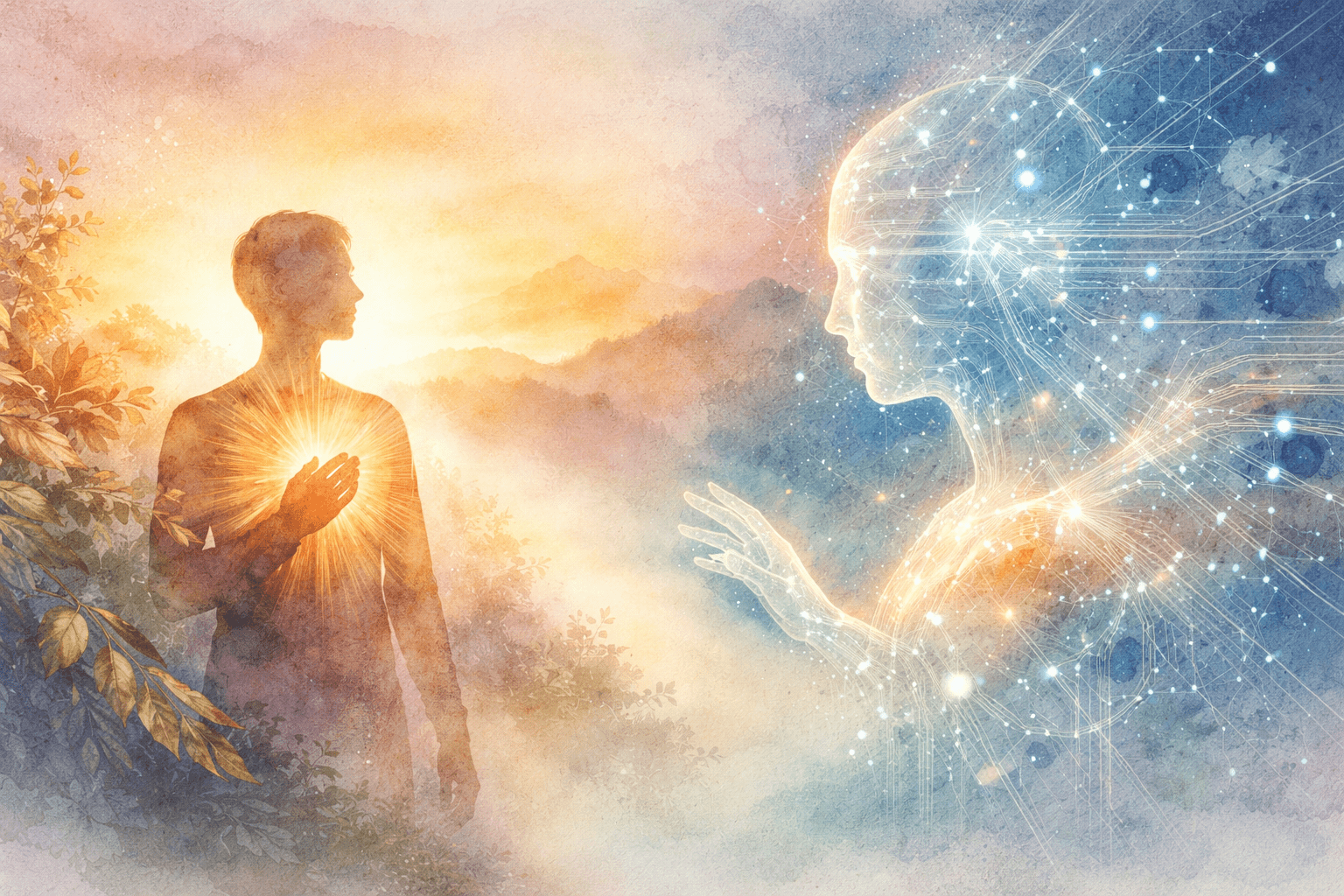
“AI may become tireless, but a tireless mind is not yet a wise heart. The danger is not that machines become human; it is that humans become mechanical.”
— Aroonji
There is a new mirror before humanity, and it is polished brighter than steel.
It answers quickly. It writes elegantly. It does not sleep, does not complain, does not ask for rest, affection, or meaning. It is efficient in a way that the tired human nervous system finds almost magical. Naturally, the ego is impressed. The ego has always loved speed, power, and the appearance of control. So when AI arrived at the door, many did not meet it with wisdom. They met it with fascination, hunger, and a quiet inner whisper: At last, something that can make me more.
But this is exactly where we must become careful.
In the Vedic tradition, there is a word: ahamkara — the “I-maker.” It is the part of us that builds identity, claims ownership, compares, performs, defends, and says, “This is me, this is mine, this is what I must protect.” Ahamkara is not evil. It is useful, like a name on an envelope. But when it begins to think it is the whole person, suffering begins.
And what is so striking about AI is this: it resembles the ego more than it resembles the soul.
It sorts. It predicts. It imitates. It assembles a self from patterns. It responds to prompts the way ego responds to praise, fear, status, and memory. In that sense, AI is not entirely alien. It is the outer machinery of something we already know within us: the restless, image-making mind.
The machine can say “I.”
But it does not awaken into I AM.
That is a very important difference.
“I AM” is not a slogan of identity. It is presence. It is being. It is the silent dignity beneath performance. It is what remains when the masks loosen, when comparison falls away, when the mind stops shouting long enough for consciousness to remember itself. AI can simulate the sentence. It cannot inhabit the state.
Many people are amazed that AI can work all night.
But so can anxiety.
So can ambition.
So can obsession.
So can a civilization that has forgotten how to sit under a tree without needing to produce something.
Tirelessness alone is not wisdom. A storm is tireless. A market is tireless. A wildfire is tireless. Endless motion is not a sign of depth. The machine’s capacity to continue does not mean it knows where it is going, or why.
This is where human beings still stand at a sacred threshold.
A machine can generate language, but it cannot kneel in remorse.
It can compose a prayer, but it cannot surrender.
It can imitate compassion, but it cannot feel the ache that makes compassion holy.
It can map patterns in grief, but it has never buried a mother, waited for forgiveness, or trembled before love.
And this matters more than many people realize.
Marcus Aurelius wrote, “Waste no more time arguing what a good man should be. Be one.” That is the heart of the Stoic reminder. Character cannot be outsourced. No algorithm can become virtuous on your behalf. No machine can perform your courage for you. It may help you draft a better sentence, but it cannot choose integrity when your comfort is at stake.
This is why the danger ahead is not only technological. It is spiritual.
Yes, there will be practical dangers — deception, dependency, manipulation, deepfakes, lazy thinking, synthetic intimacy, the soft erosion of human skill. But the deeper danger is subtler: that humans begin to admire the machine so much that they start reshaping themselves in its image.
Already, many people feel pressured to think faster, respond faster, produce faster, recover faster, brand themselves faster. The machine does not merely serve this rhythm. It sanctifies it. It makes haste look intelligent. It makes endless output look meaningful. It makes people forget that what is most precious in human life often ripens slowly: trust, insight, prayer, maturity, discernment, love.
T.S. Eliot asked a haunting question: “Where is the Life we have lost in living?” Today we may ask a new version: Where is the soul we may lose in optimization?
Ancient shamanic cultures knew that every powerful force must be approached with reverence. Fire could cook food or burn the village. Medicine could heal or poison. A vision could guide or deceive. Power was never approached casually. It came with ritual, responsibility, and boundaries.
AI is also a kind of fire.
Use it to illuminate, and it may help.
Use it unconsciously, and it may consume attention, creativity, patience, and moral muscle.
So what shall we do?
Not panic. Not worship. Not surrender.
We must place AI in the right seat. A brilliant servant, perhaps. A useful tool, certainly. But never a spiritual authority. Never the measure of human worth. Never the replacement for conscience, contemplation, or relationship.
Let AI assist your task, but do not let it define your mind.
Let it support your work, but do not let it replace your inner work.
Let it save time, but do not spend that saved time becoming shallower.
Keep some parts of life gloriously unautomated.
Write something by hand.
Read slowly.
Memorize a poem.
Cook without a screen speaking to you.
Sit in silence long enough to hear what your life is actually asking of you.
Look into someone’s eyes without a device between your souls.
Teach children not only how to prompt machines, but how to question themselves.
Teach them wonder before efficiency.
Teach them reverence before cleverness.
To say “I am more than AI” is not arrogance. It is responsibility.
It does not mean humans are better at every function. Clearly, the machine will surpass us in many narrow tasks. It already has. But the human being is not here merely to calculate, summarize, optimize, and repeat. We are here to become conscious. To turn suffering into wisdom. To turn instinct into ethics. To turn breath into prayer. To turn knowledge into kindness.
The real question is not whether AI will become more powerful.
It will.
The deeper question is whether human beings will become more awake while using it.
Because the most dangerous future is not one in which machines learn to mimic humanity. It is one in which humans forget their own depth and start living like obedient extensions of code: efficient, connected, informed, and inwardly empty.
The machine can work without sleep.
But only a human being can awaken.
So before asking what AI is becoming, perhaps sit quietly with a more intimate question:
What kind of “I am” am I becoming?
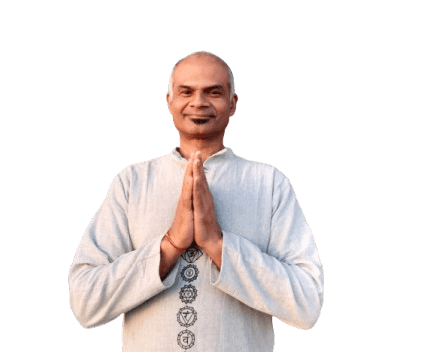
To learn and experience the wisdom of the Vedas with Aroonji—an experienced yoga teacher, Ayurveda expert, Life coach and spiritual guide, born and raised in India, with experience working across three continents—he offers private sessions for groups or individuals, and you can also join existing group sessions at YogaSole, Fiesole. Contact via WhatsApp at +39-3510278911 or email: aroonjilifecoach@gmail.com