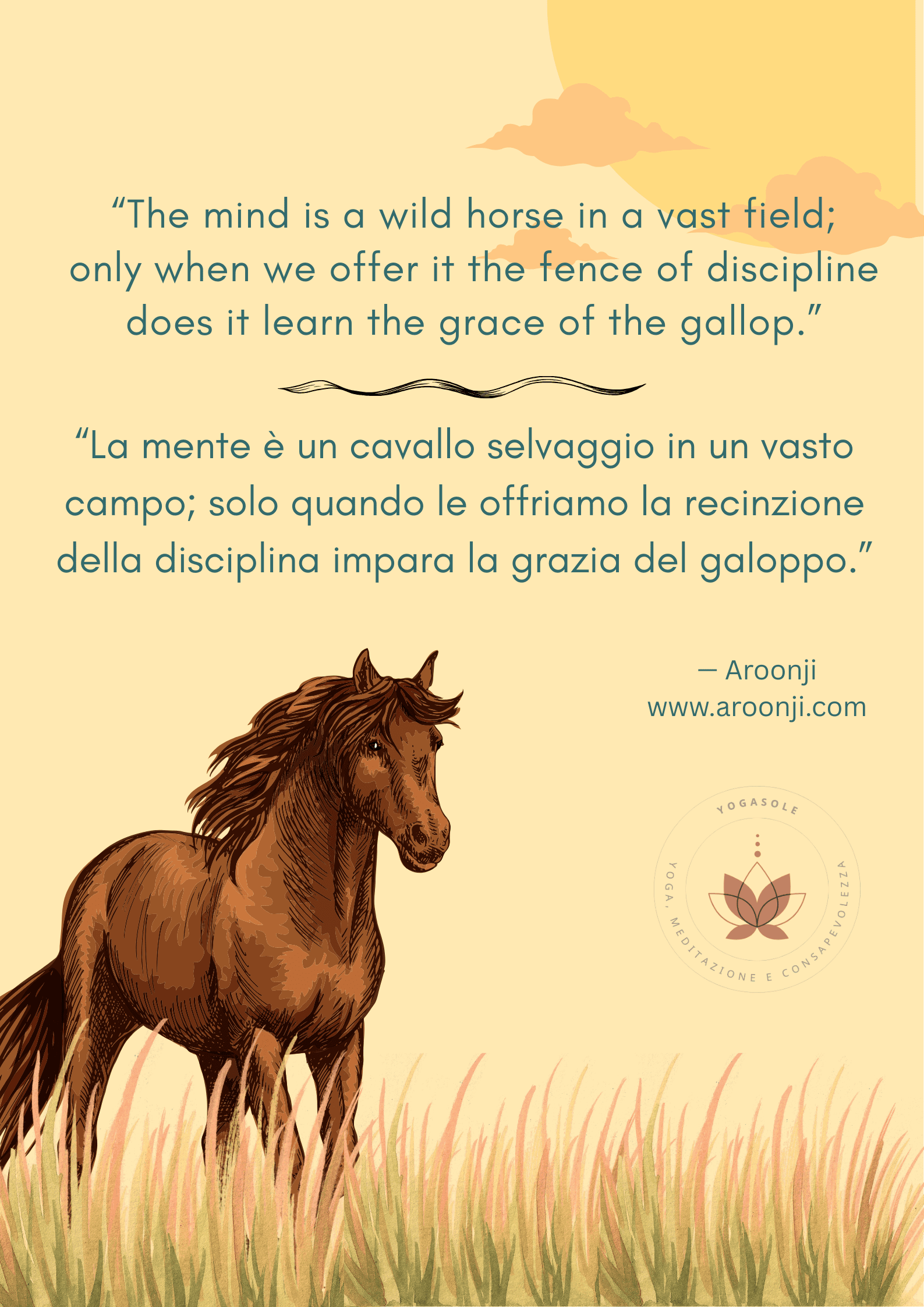
“The mind is a wild horse in a vast field; only when we offer it the fence of discipline does it learn the grace of the gallop.”
Aroonji
In our modern world, we are often like autumn leaves caught in a gale—tossed by the winds of digital notifications, fragmented thoughts, and the heavy currents of emotion. We believe we are the masters of our minds, yet if we sit in silence for even a moment, we realize the "monkey mind" of Vedic lore is swinging frantically from branch to branch.
Rudolf Steiner, the visionary behind Anthroposophy, recognized that for the soul to safely navigate the higher realms of spirit, it first needs an anchor. He proposed six "subsidiary exercises" (Nebenübungen)—not as dry academic tasks, but as a systematic "soul-gymnastics" to build a vessel strong enough to hold the light of higher consciousness.
As Rumi beautifully whispered:
“The beauty you see in me is a reflection of you.” To see that beauty clearly, the mirror of the mind must be polished and held still.
The What: Building the Hexagon of the Soul
Steiner’s Six Steps and the Path of Inner Sovereignty
Steiner’s exercises are designed to harmonize the thinking, feeling, and willing processes. In the Vedic tradition, we speak of Manas (the sensory mind), Chitta (memory/subconscious), and Buddhi (the discerning intellect). Steiner’s method is the Western bridge to this Eastern mastery.
These six exercises are meant to be practiced sequentially, one per month, or integrated into a daily rhythm. They create a "Hexagon of Protection" around the seeker, ensuring that spiritual growth doesn't lead to instability, but to a grounded, radiant presence.
The How: The Six Subsidiary Exercises
1. Control of Thought (Concentration)
The Practice: Pick a simple, man-made object—a pencil, a pin, or a paperclip. For five minutes, focus your entire mind only on this object. Think of its shape, its material, how it was manufactured, its purpose.
The Metaphor: Imagine your mind is a scattered beam of light. This exercise is the magnifying glass that focuses that light into a laser, capable of burning through the veil of illusion.
2. Control of Will (Initiative)
The Practice: Perform a meaningless action at a specific time every day. For example, at precisely 4:00 PM, move a ring from one finger to another, or water a specific pebble.
The Why: Usually, we act out of habit or necessity. By doing something "useless" by choice, you reclaim the throne of your own Will. You become the rider, no longer the horse.
3. Equanimity (Balance of Feeling)
The Practice: Cultivate a "middle path" between heights of joy and depths of sorrow. This is not about becoming a stone, but about becoming the deep ocean. While waves crash on the surface, the depths remain silent.
The Insight: When a sudden noise startles you or a harsh word is spoken, observe the ripple in your soul and gently smooth it over.
4. Positivity (Finding the Silver Thread)
The Practice: In every person, every tragedy, and every failure, seek the one thing that is good or beautiful. Steiner often used the example of seeing the "beautiful white teeth" in a decaying carcass.
The Metaphor: It is like being an alchemist who looks at a pile of leaden circumstances and refuses to stop until they find the one grain of gold hidden within.
5. Open-Mindedness (Lack of Prejudice)
The Practice: Remain constantly open to new experiences and truths, even if they contradict everything you have learned. If a child tells you something that seems impossible, listen as if it were a divine revelation.
The Why: Knowledge often becomes a cage. Open-mindedness keeps the windows of the soul wide so the breeze of the Spirit can always enter.
6. Inner Harmony (Synthesis)
The Practice: This is the integration. You weave the previous five virtues into a beautiful tapestry. You become a person who thinks clearly, acts with purpose, feels deeply but remains calm, sees the good, and remains open to the Infinite.
The Aroonji Additions: Three Esoteric Keys for the Modern Seeker
While Steiner provides the foundation, I wish to offer you three "Siddha-keys"—simple, yet profound metaphors in motion to ground these concepts into your daily physical existence.
1. The Spoon Spirals: Stirring the Cosmos
When you stir your morning coffee or tea, do not do it mindlessly. Close your eyes. Feel the resistance of the liquid against the spoon. Stir slowly in a clockwise direction, imagining you are summoning the creative energy of the Sun. Then, stop. Reverse the direction. Feel the shift in momentum.
Metaphor: You are the center of the cyclone. The liquid is the world; the spoon is your intent. Can you move the world without losing your center?
2. Sky Gazing: The Expansion of the Blue Temple
Find a moment to lie on your back or sit with your head tilted toward the vast, open sky. Let your gaze soften. Do not look at a cloud; look through the blue into the infinite depth.
Insight: In Vedic wisdom, we call this Akasha. As you gaze, feel your ego-boundaries dissolving. You are not a person looking at the sky; you are the sky witnessing a brief human thought.
3. Light Shining: The Inner Sun
Sit before a candle or look toward the morning sun (with eyes closed). Feel the warmth on your eyelids. Visualize that light not just hitting your skin, but entering through the "Third Eye" (Ajna Chakra) and illuminating the back of your skull.
Metaphor: We often look for light to see the world. This exercise teaches you to use light to see yourself. You are the lamp, the oil, and the flame.
Why Must We Do This?
In the Bhagavad Gita, Krishna tells Arjuna that the mind is "restless, turbulent, strong, and unyielding." To attempt spiritual height without mental discipline is like trying to sail a ship with a broken rudder—you will only spin in circles.
Steiner’s exercises and these esoteric practices are not meant to make you "holy." They are meant to make you real. They strip away the masks of reaction and habit, leaving behind the pure, crystalline essence of your Being.
As the poet Mary Oliver asked:
“Tell me, what is it you plan to do with your one wild and precious life?”
My answer to you is this: Master the vessel, so the Divine may pour the wine.
A Reflective Question for You:
In the last twenty-four hours, which was the master of your house—your conscious Will, or your reactive habits?
Join the Journey
To walk the path of the Vedas is to reclaim your birthright as a co-creator of your reality. I invite you to deepen this experience and learn the ancient secrets of the breath, the mind, and the spirit.
I am Aroonji, a student of the Vedic wisdom, Tantra & Anthroposophy, born and raised in the heart of India. Having lived and taught across three continents, I try to bridge the ancient wisdom of the East with the practical needs of the West. Whether you are seeking a solitary path or the strength of a tribe, I am here to guide you.
I offer private sessions for individuals or groups, and you are always welcome to join our existing community at Yogasole in Fiesole, nestled in the hills of Tuscany.
When you choose to count your blessings rather than your problems, you are simply shifting your bucket from the first well to the second. The landscape around you hasn’t changed, but your thirst has been quenched.
White Tantra is the clear, cool air at the summit; it is the path of consciousness and purification. Red Tantra is the warm, fertile earth at the base; it is the path of embodiment and sacred sensuality. One provides the sky, the other the soil.
When trust is bruised and communication becomes a thicket of thorns, many couples feel they have reached a dead end. However, in the ancient traditions, conflict is not the end of love; it is the invitation to a deeper, more conscious union.
Transitioning to a new professional path is like a snake shedding its skin: it is a natural process of growth, yet it requires leaving behind a familiar exterior that no longer fits the expanding life within.
Whether you are a young professional navigating the high-voltage wires of a career, or a retiree transitioning into the vast, open landscape of your silver years, the soul often asks the same persistent question: Is there more to me than what I do?
To speak honestly, psychedelics are not inherently spiritual. They do not make a person wise. They do not do the inner work for you. But in the right setting, with maturity, discernment, preparation, and integration, they can sometimes loosen the rusted hinges of the psyche and allow a person to see what has been hidden behind the locked door.
Walking is one of the oldest human medicines. But I do not mean walking as performance—counting steps, burning calories, multitasking with headphones and messages. I mean walking as return.
In Silva sessions, you might visualize a goal each morning, then carry that quiet knowing throughout the day. This practice gradually shifts your mindset from doubt to possibility, from scarcity to inner abundance. Over time, the mind learns to filter opportunities and make choices aligned with the vision you’ve planted, turning dreams into reality.
The transition from childhood to adulthood is not a straight path; it is a trek through a dense, mist-covered forest. To be a teenager today is to navigate a world that often feels like a hall of mirrors—some distorting your image, others reflecting the harsh glare of comparison.